Island Solar
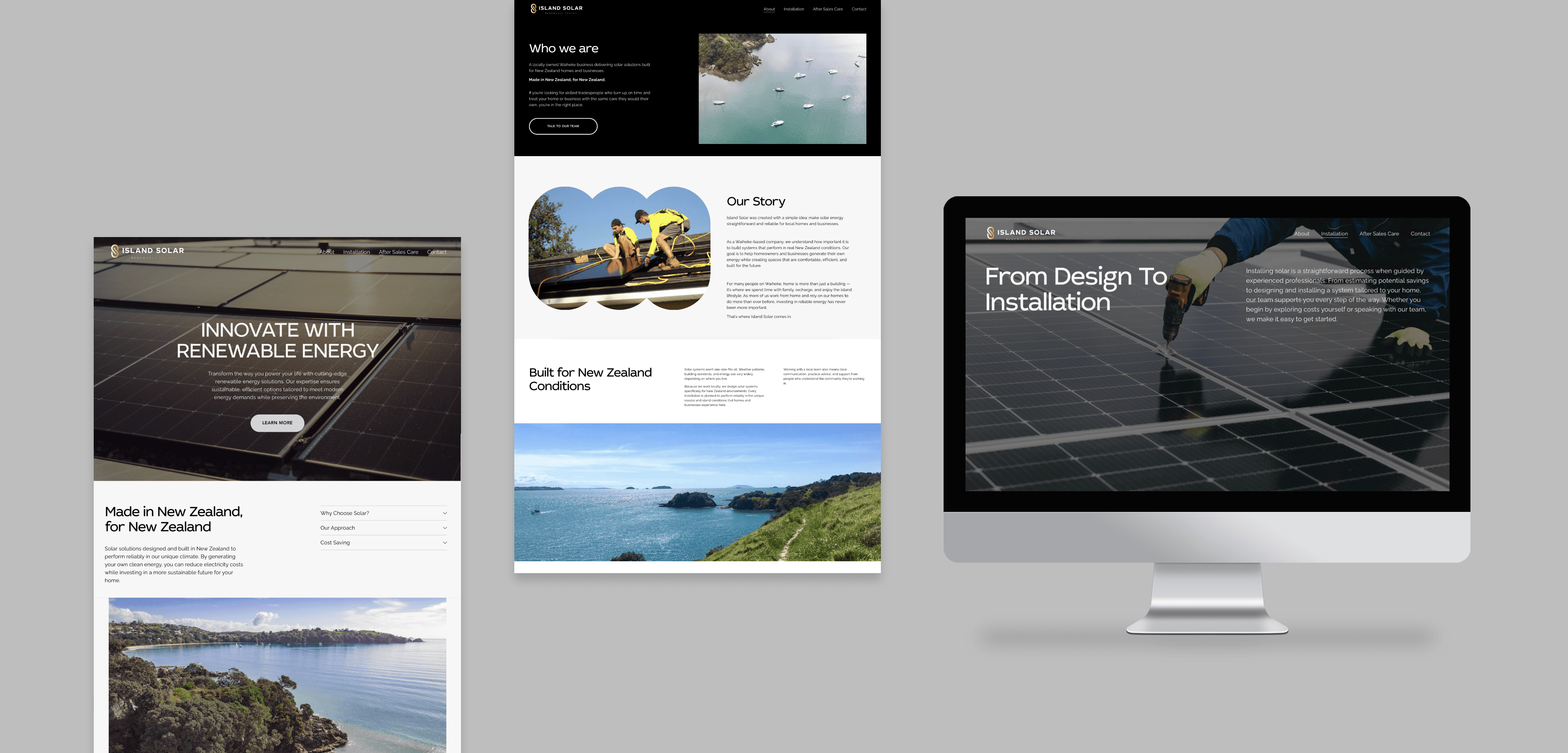
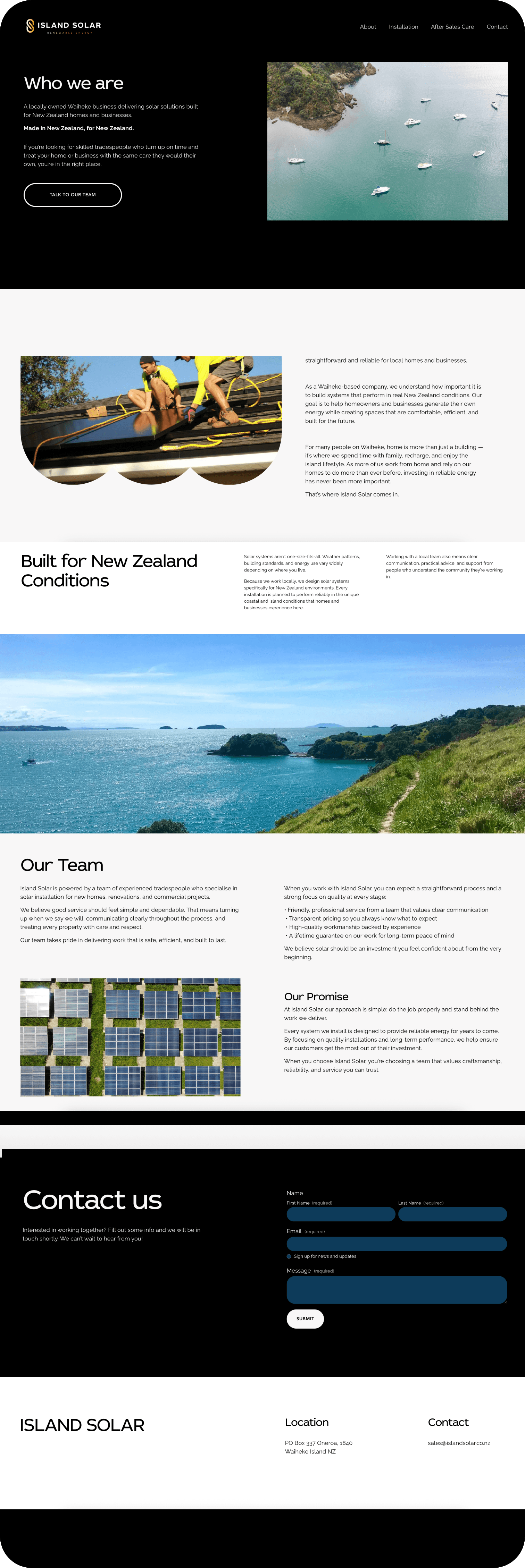
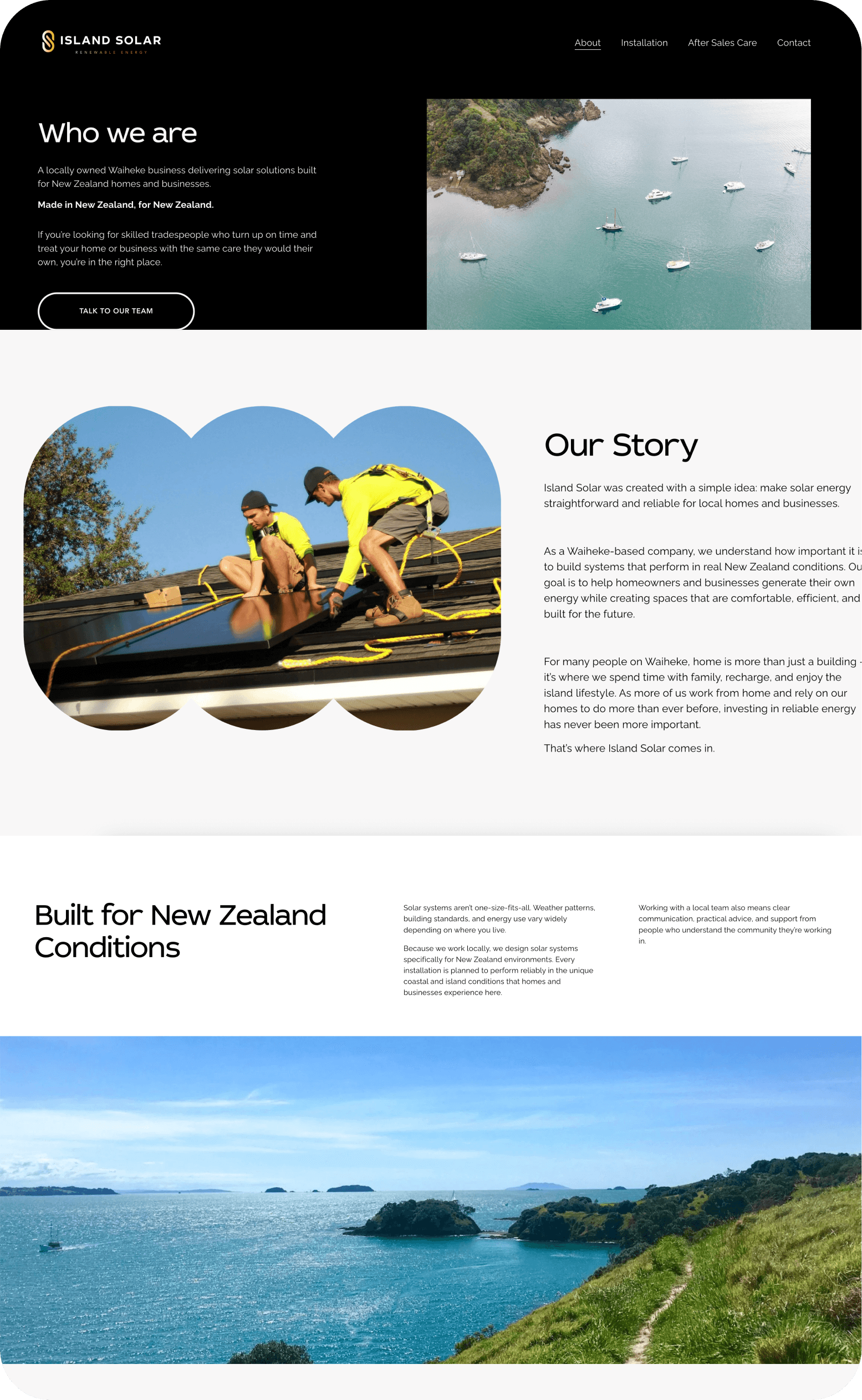
I was approached by Island Solar to design a visual identity and website that would establish a clear, modern presence for the brand. The focus was on translating complex information into a simple, intuitive experience, guiding users from curiosity through to confident, informed decisions.
From developing the visual identity to designing the website, the work focused on building a cohesive system that translates seamlessly into a clear, user-focused digital experience.
Project type
Website
Client
Island Solar
Year
2026
PREVIOUS PROJECT
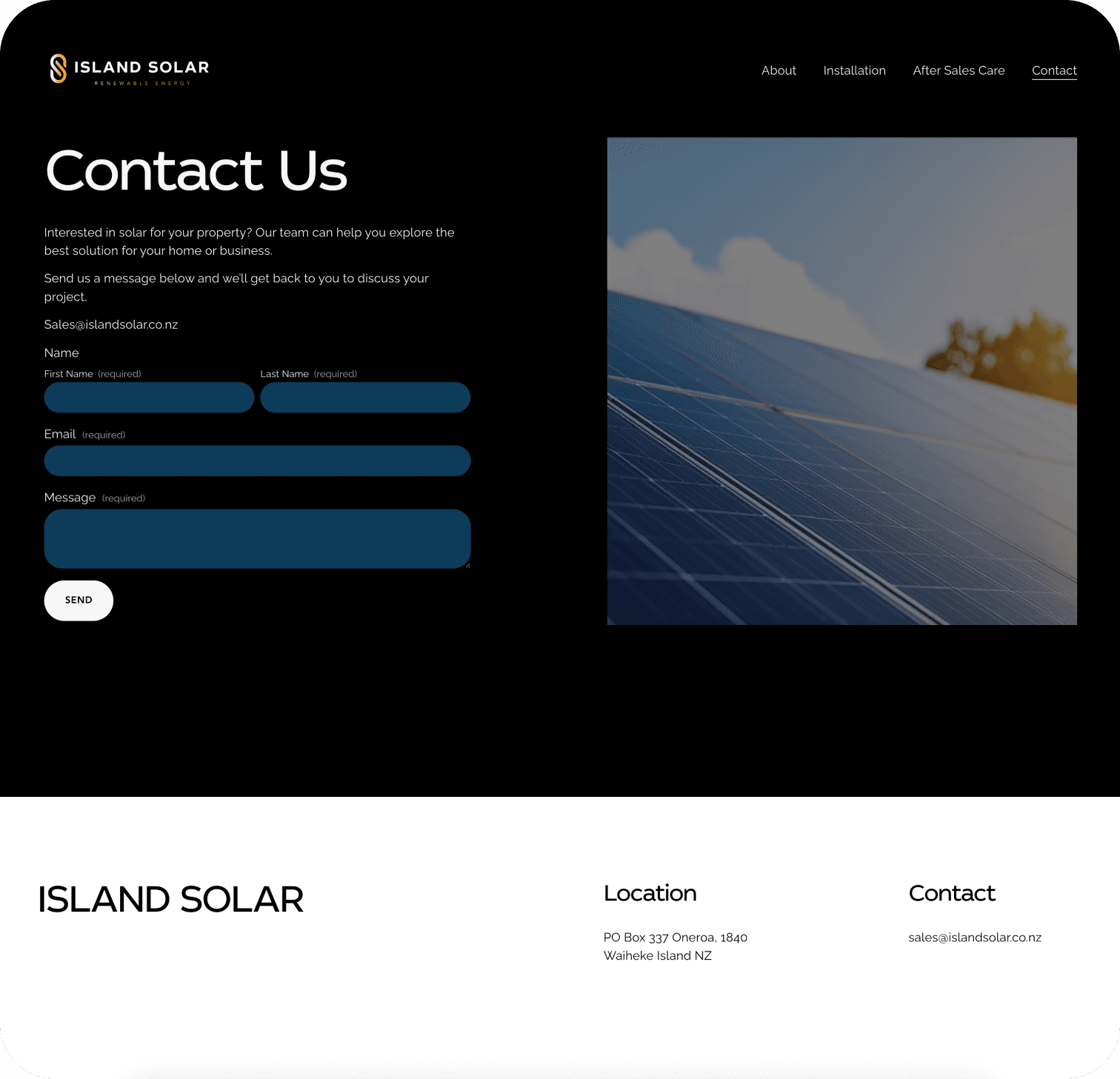
At this point in the journey, the design's job is largely done. They've built enough understanding to feel informed and enough trust to feel confident, adding more content here would undermine both. The restraint is intentional: a simple, frictionless form signals that the company respects the user's time and doesn't need to oversell at the finish line
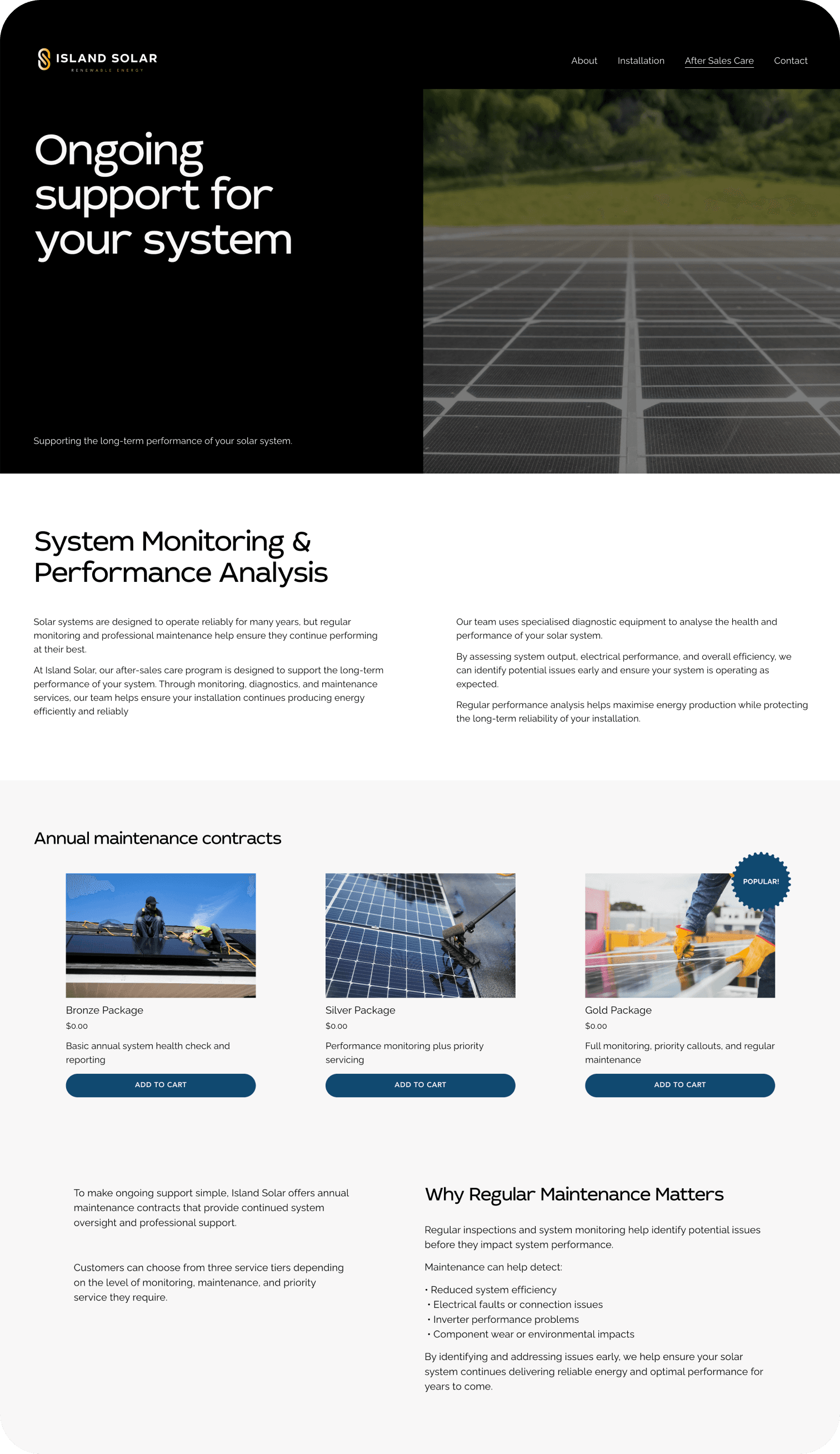
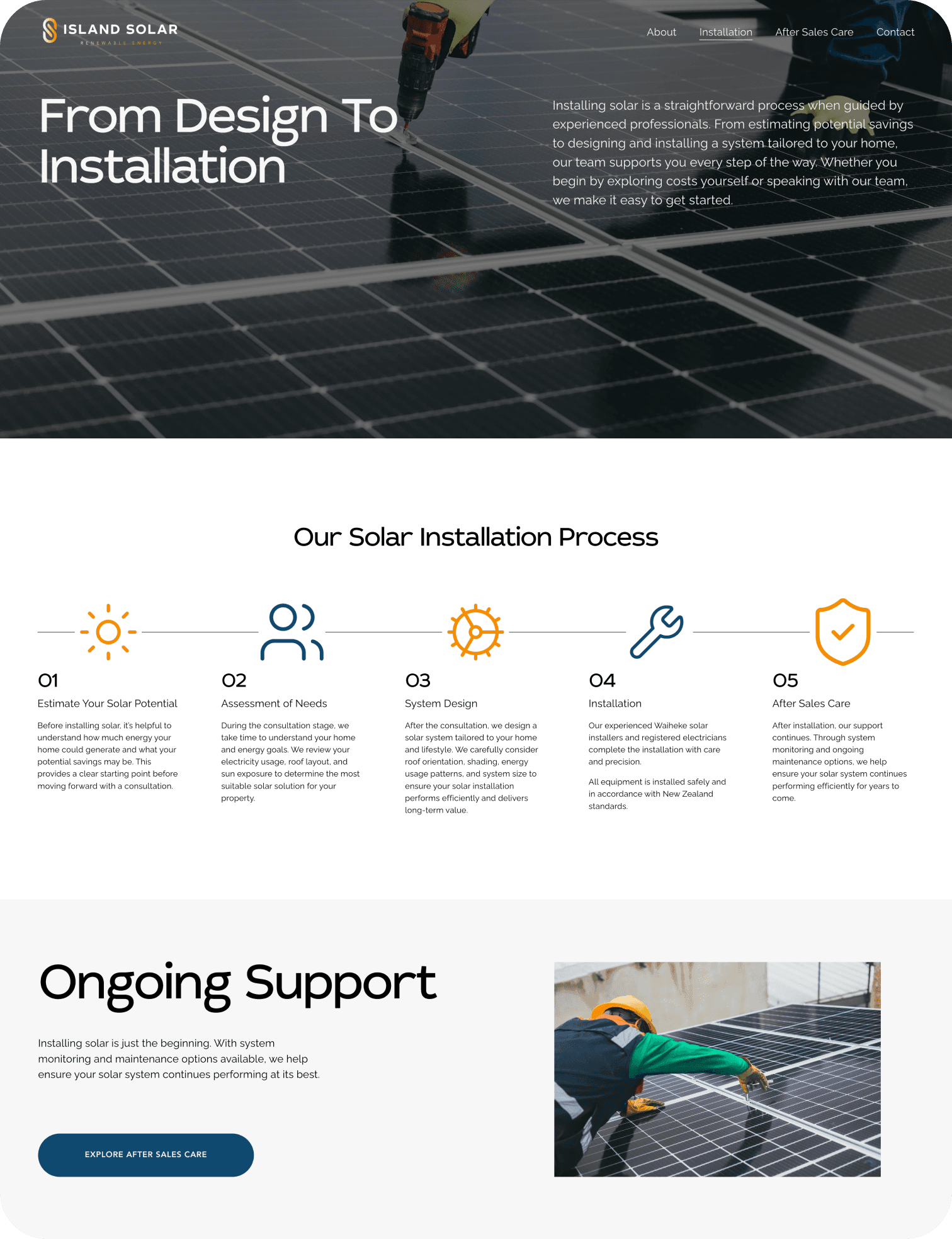
By the time users reach the Installation page, the remaining barrier isn't awareness or trust, it's the fear of committing to something they don't fully understand. Framing the process as five distinct stages helps shift it from feeling unknown to something structured and approachable. Users can see exactly what they're agreeing to before they agree to it.
Though the page doesn’t stop at installation. By moving directly into ongoing support packages, the relationship shifts from a one-off transaction to something ongoing, reinforcing that this Waiheke-based company is there to support customers at every stage.
Presenting tiered care options at this point, before the user has even enquired, signals that the company has considered what happens after the sale. That's a meaningful trust signal for a high-stakes purchase.
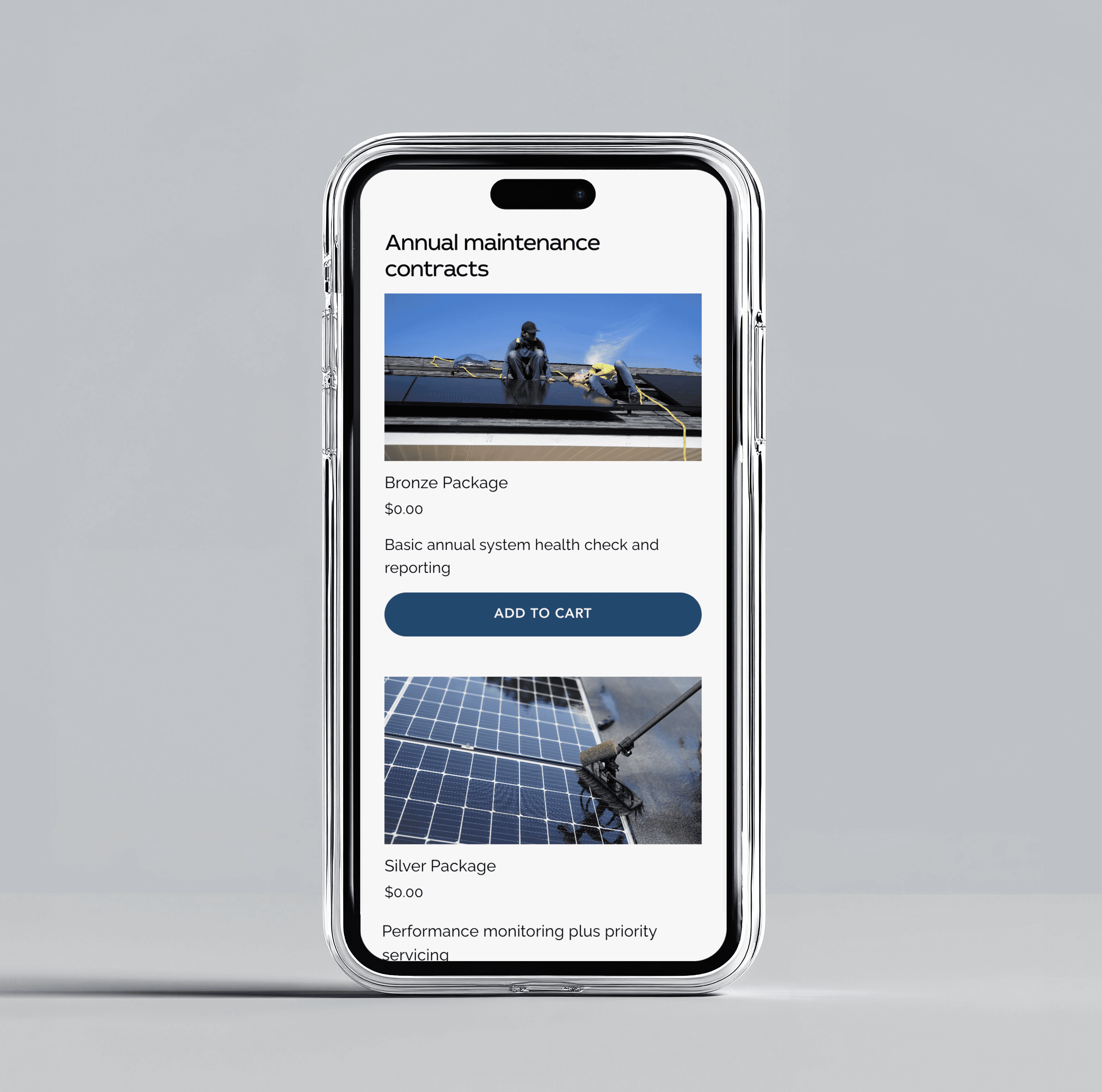
Solar energy asks a lot of users upfront: system sizing, feed-in tariffs and payback periods before they've decided whether they even care. Most information design responds by organising this complexity, but organisation alone doesn't reduce cognitive load, it just tidies it.
The real problem is sequencing: users need enough to feel confident, not everything at once. So rather than presenting a complete picture, the design withholds information intentionally, surfacing detail only when a user's action signals they're ready for it. The risk is that this feels like friction; the design has to earn trust before it earns patience.
Without an existing user base to draw from, the design assumptions had to come from the industry itself. Solar energy carries a lot of specialist language, and terms that are routine for installers and providers don't necessarily mean anything to a homeowner trying to make a financial decision. That gap between industry communication and user comprehension became the central problem the design needed to address, prioritising plain language and a gradual introduction of detail over the kind of technical completeness the industry tends to default to.