Artaura Art
The client's preference for simplicity wasn't just an aesthetic constraint, it was the right call structurally. A minimal design keeps attention on the work, which is ultimately what converts a visitor into a booking. Style is personality here, the client's portfolio isn't just evidence of skill, it's how the artist communicates who she is.
Project type
Website Design
Client
Artaura Art
Year
2026
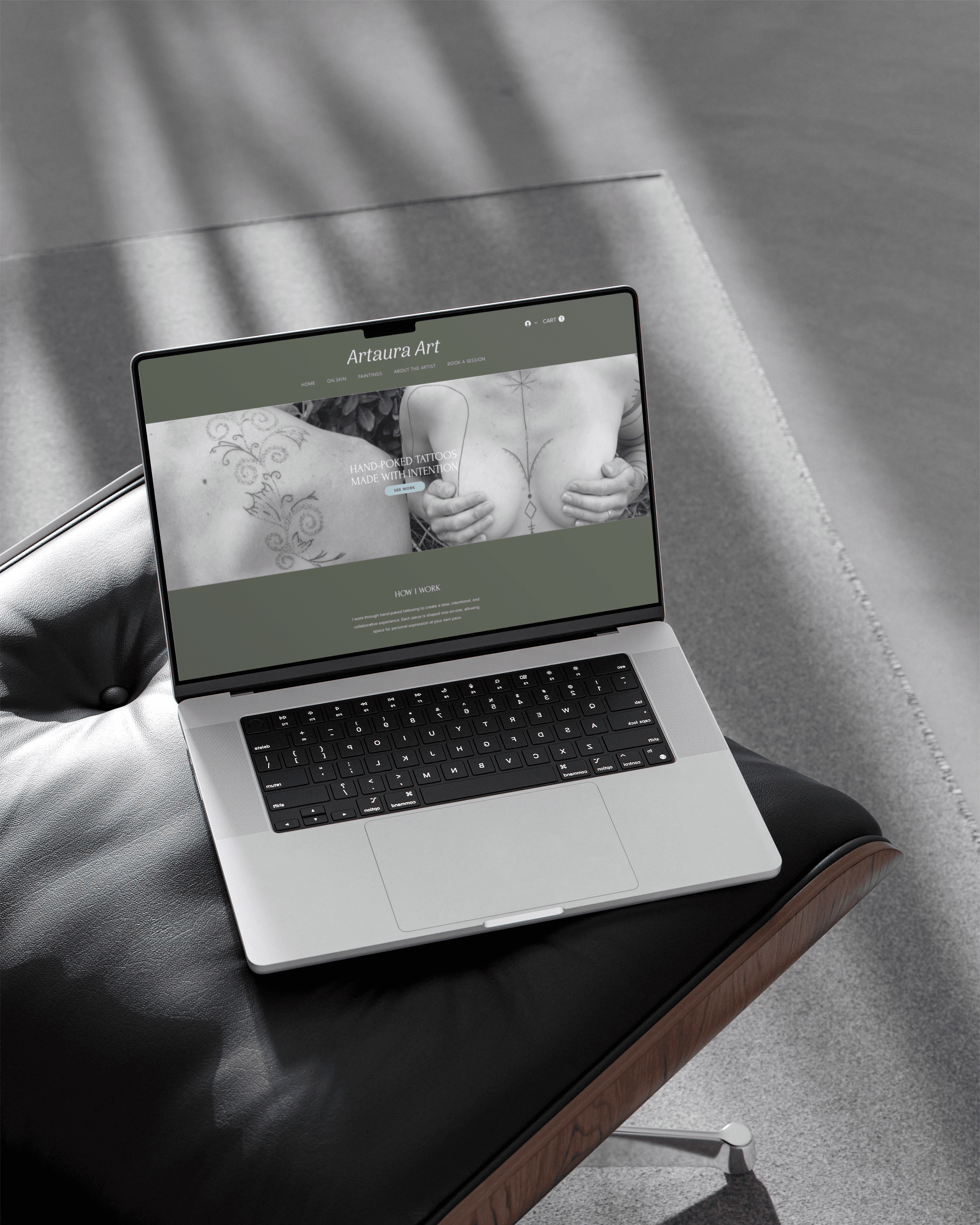
Additional sections, including artwork and an expanded artist profile, are currently in development as part of the ongoing evolution of the site.
The site works because it doesn't try to do too much. For an artist whose practice is built on personal connection, a design that gets out of the way is a design that's doing its job, the work carries the argument, and the experience supports it without interrupting it.
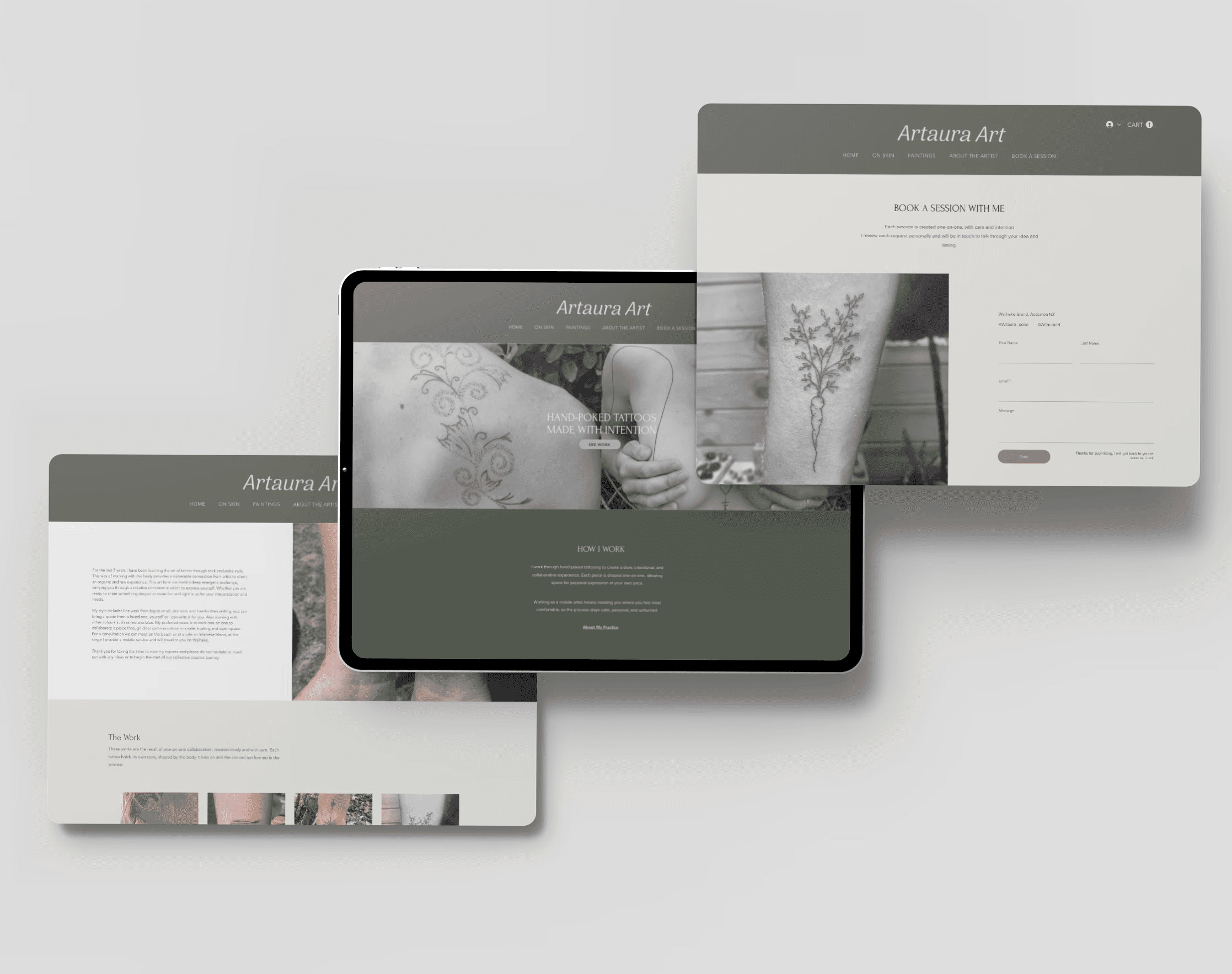
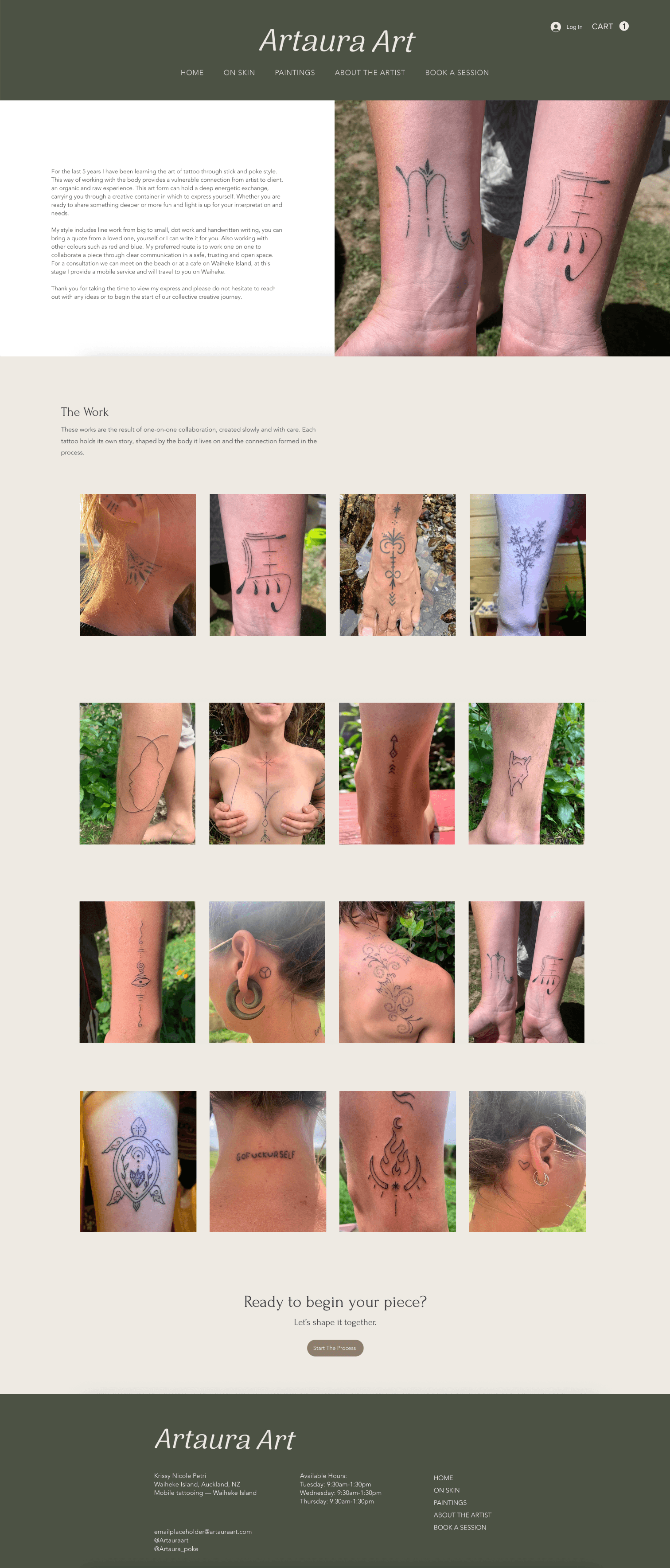
Showing tattoos on skin rather than as isolated designs does specific work. A user isn't just evaluating aesthetics, they're imagining the result on their own body, which means context matters. "On Skin" frames the portfolio as evidence rather than display, giving users what they actually need to feel ready to book.
The minimal layout protects that. Nothing competes with the images, so the work can be read on its own terms, style, scale, placement, how a design sits on different parts of the body. By the end of the page, a user has enough to know whether this artist is right for them.
Flash designs were left out deliberately — finished work on skin is more useful to someone trying to imagine a result than a reference sheet ever could be. The selection also spans different placements across the body, so users can see where the artist has worked before and whether she's tattooed the area they have in mind.
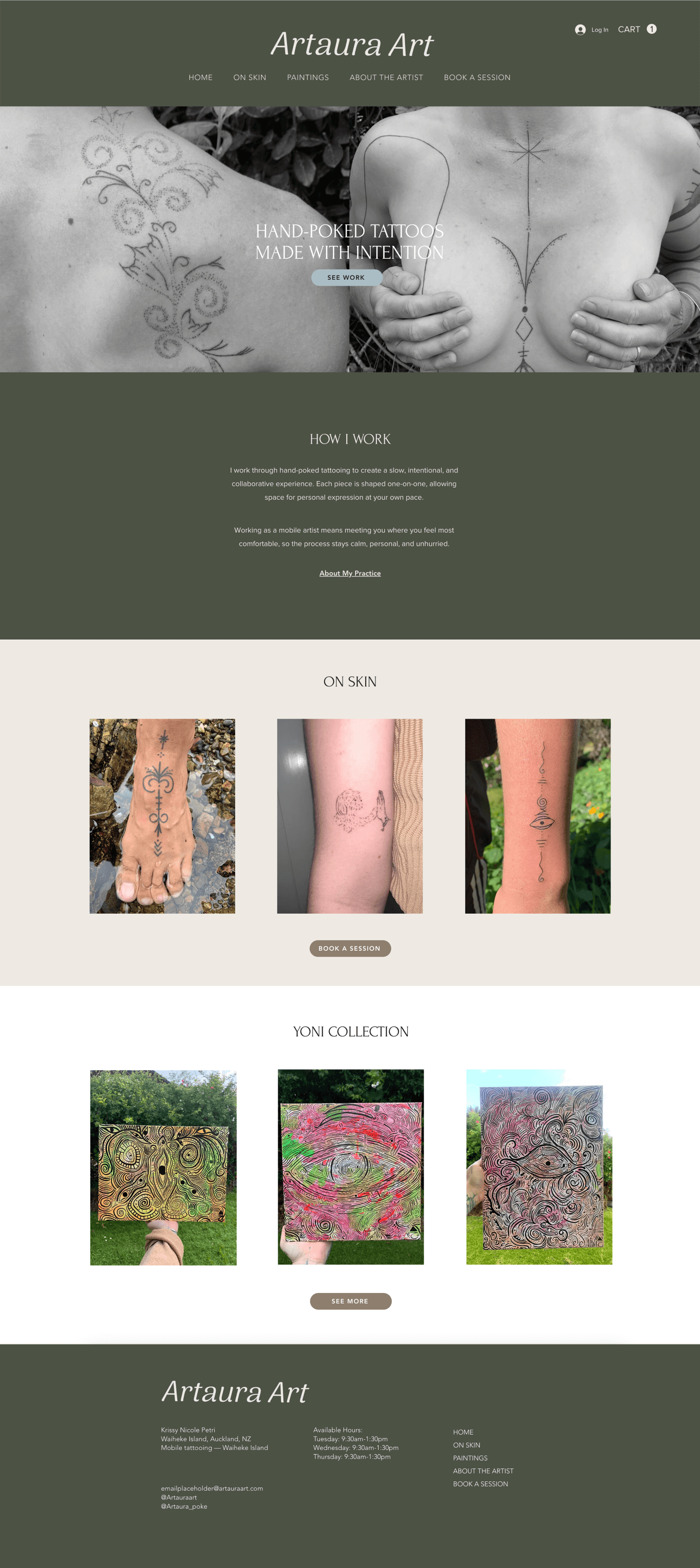
The homepage leads with the work, not the words. A full-bleed image answers the most important question — what does her style look like? — before the user has had to read anything.
For a service where aesthetic fit is the deciding factor, getting that answer in front of the user immediately is more persuasive than any description could be.
Everything else is held back until the visual has done its job. Navigation is minimal, text is sparse, the design doesn't compete with the first impression, it protects it.
Below the initial impression, a "How I Work" section makes the collaborative nature of the process explicit early. For a service this personal, knowing how the artist works is as important as knowing what she produces, it reassures users that a booking isn't a transaction but a conversation, and that their input is part of the process.
The main challenge with Artaura Art wasn't visual, it was tonal. A booking driven site was the key thing we tried to avoid as it risks feeling transactional, which works against everything this kind of service depends on which is personal connection and trust. The design had to guide users towards a booking without making the process feel like their latest purchase.
That meant resisting the usual conversion instincts: no prominent calls-to-action, no pricing upfront, no friction-reducing checkout flow. Instead, the site earns the booking by building familiarity first, through the work, the artist's sensibility, and a process that opens with a conversation rather than a calendar.
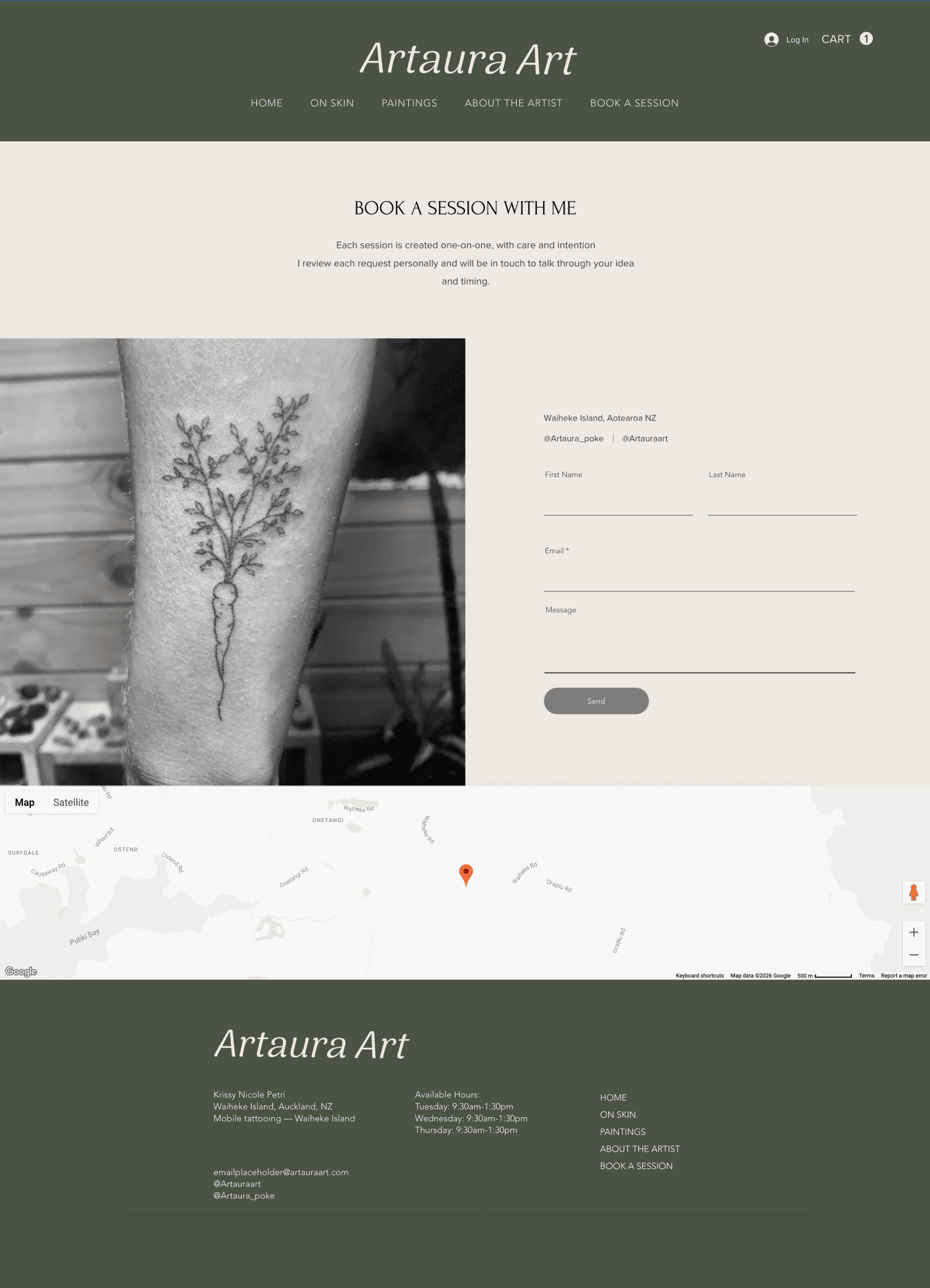
As a mobile artist, each session involves variables a calendar can't capture, the location, design, availability, and a conversation about what the client actually wants.
A structured booking system would have imposed a false simplicity on a process that doesn't work that way. The enquiry form reflects how bookings actually happen: it opens a conversation rather than confirming a transaction.
This also connects back to the tonal argument the whole site is built around. The form is the point where a visitor becomes a client, keeping that moment conversational rather than transactional is what makes the difference between a booking that feels chosen and one that feels processed.
PREVIOUS PROJECT
NEXT PROJECT